Carpenter Ants
Carpenter ants are among the largest ants in North America, known for tunneling through wood to create nesting sites.
Appearance and Size
Carpenter ants are remarkably large compared to common house ants. Workers can range from 1/4 to 1/2 inch in length, while the queen can reach nearly an inch. They are typically solid black, though some species may have reddish or brown tones. One of their most distinguishing features is their polymorphic nature, meaning workers in a single colony come in various sizes, each with different roles like foraging or defense.
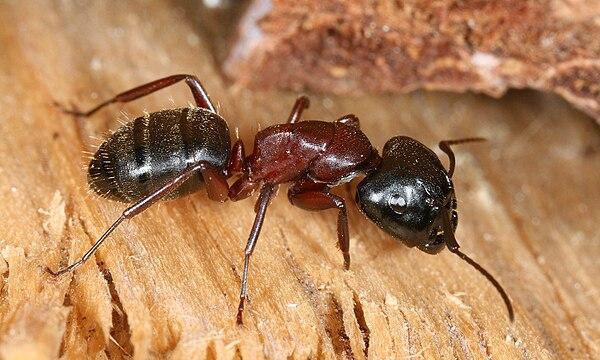
Close up of a carpenter ant with visible red thorax
How They Work
A common misconception is that carpenter ants eat wood. In reality, they only excavate it. Using their powerful mandibles, they tear out "galleries" in wood to provide space for their growing colony. They prefer moist or decaying wood, which is easier to tunnel through, but once established, they can move into sound, dry wood. Over time, this excavation can weaken the structural integrity of a building, especially in shared-wall townhouse structures where they can migrate between units.
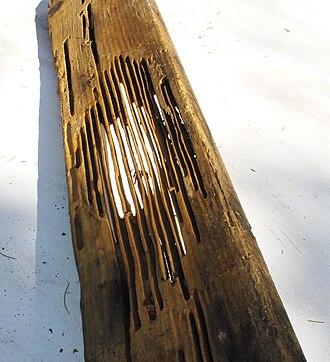
Structural wood damage caused by carpenter ant tunneling
Nesting Habits
Carpenter ants typically maintain a "parent" colony (often located outdoors in a tree stump or woodpile) and several "satellite" colonies. Satellite colonies are often the ones found inside homes, where the environment is warmer and drier. These colonies contain workers, older larvae, and pupae, but usually no eggs or queen. Identifying these satellite nests—often found behind walls, under floors, or in attic spaces—is the key to stopping an infestation.
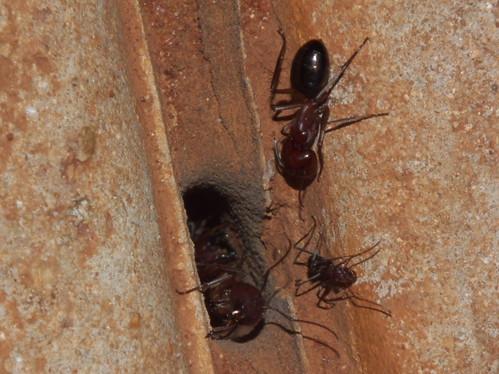
Carpenter ants emerging from a hole in wood
The Aphid Connection
While they foragers for various foods, carpenter ants have a fascinating relationship with aphids. They essentially "farm" these small insects, protecting them from predators in exchange for "honeydew"—a sugary liquid the aphids excrete. If you see ants trailing up and down a tree or shrub near your home, they are likely tending to an aphid colony. Controlling the aphids in your garden is often a necessary step in reducing the local ant population.
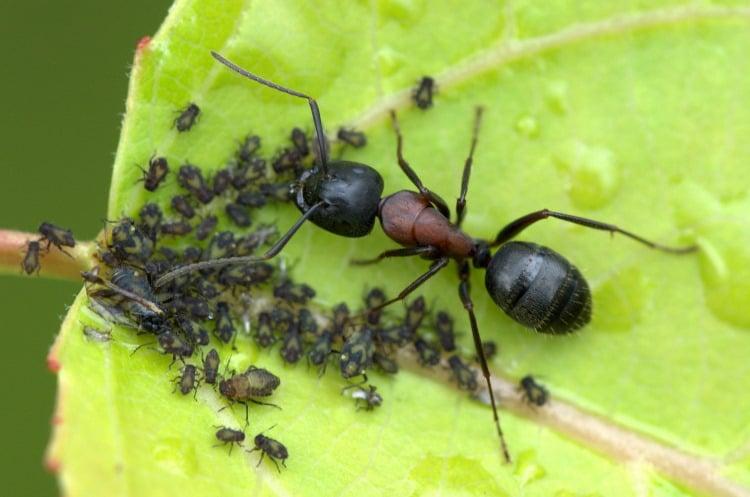
Carpenter ant tending to aphids on a plant
How to Get Rid of Them
Effective control requires a multi-pronged approach:
1. Eliminate Moisture: Fix leaky pipes and ensure proper drainage around your foundation. Remove any wet or rotting wood from the property.
2. Physical Barriers: Keep woodpiles and debris away from the house siding. Trim tree branches so they do not touch the roof or walls.
3. Baits: If you have an active infestation, baits (such as borax mixed with sugar or commercial ant poison granules) can be effective. These are slow-acting poisons that workers carry back to the nest to eliminate the colony. These should only be used to treat an existing problem and are not recommended for preventative use.
4. Aphid Control: Spray infested garden plants with neem oil or soapy water to remove the ants' primary food source.