Subterranean Termites
Known as "silent destroyers," subterranean termites are the most destructive wood-destroying insects in North America, living in massive underground colonies.
Biology and Social Structure
Subterranean termites (Reticulitermes) are social insects that live in highly organized colonies. A single colony can contain millions of individuals, divided into a rigid caste system:
1. Workers: Cream-colored and blind, they make up the bulk of the colony. They are responsible for foraging for food, maintaining the nest, and feeding the other castes.
2. Soldiers: Distinguished by their large, dark heads and powerful mandibles, they protect the colony from predators (primarily ants).
3. Reproductives (Swarmers): These are the winged termites you may see in the spring. Their job is to fly out, find a mate, and start a new colony. If you see "flying ants" inside your home, they are likely termite swarmers.
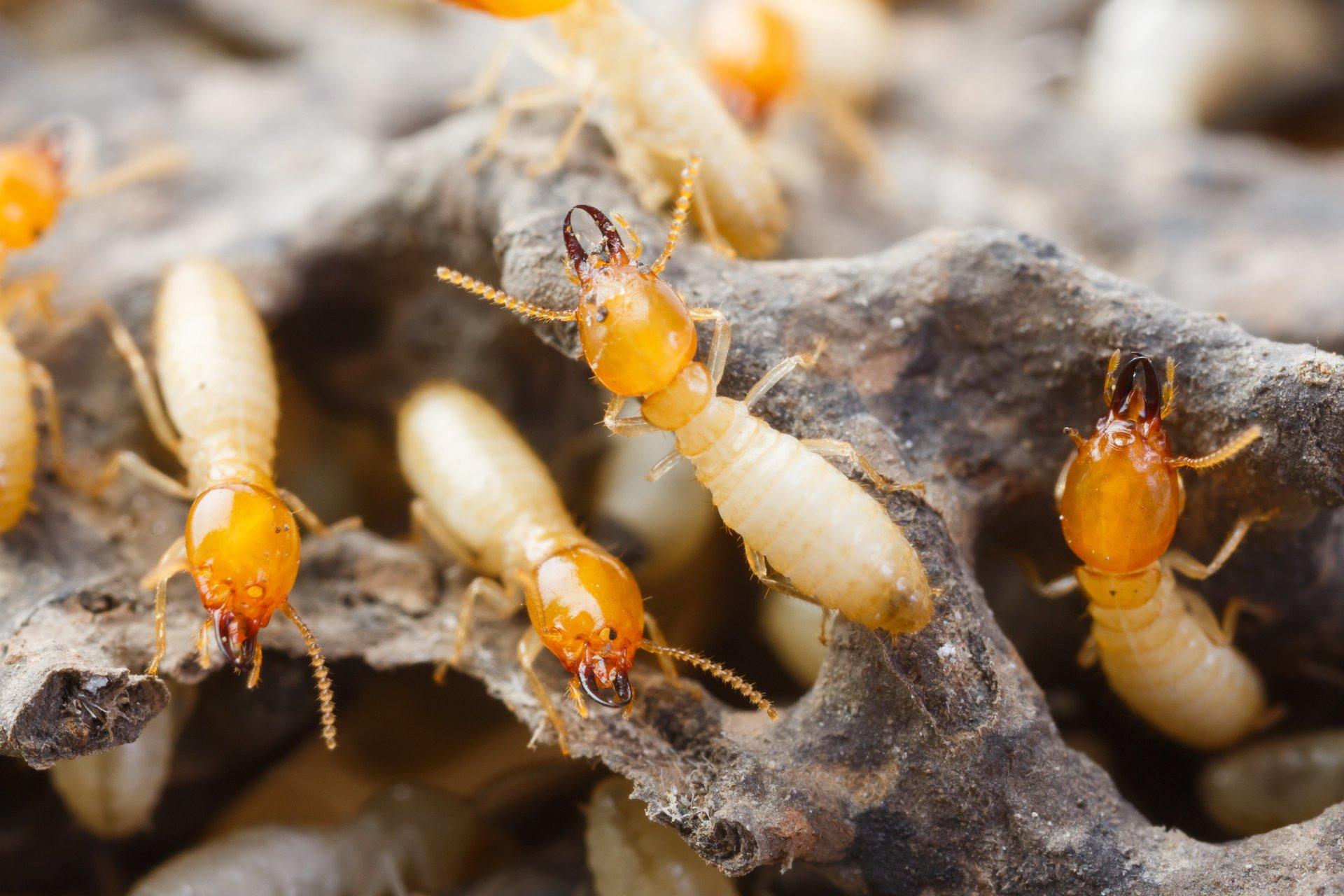
A group of subterranean termite workers and soldiers
The Silent Destroyer
Subterranean termites are called "silent" because they can chew through wood, flooring, and even wallpaper for years without being detected. Unlike carpenter ants, which only excavate wood, termites actually eat the cellulose (the structural component of wood). They have specialized bacteria in their gut that allows them to break down this tough material. Because they are sensitive to light and dry air, they almost always feed from the inside out, leaving a thin veneer of wood or paint on the surface.
The Tell-Tale Sign: Mud Tubes
Because they require a high-moisture environment to survive, subterranean termites build "shelter tubes"—often called mud tubes—to travel between their underground nest and the wood in your home. These tubes are made of a mixture of soil, saliva, and frass (waste). You will most commonly find these pencil-sized tubes on concrete foundations, in crawl spaces, or along floor joists. If you see a mud tube, do not disturb it until a professional can inspect it, but it is a definitive sign of an active or past infestation.
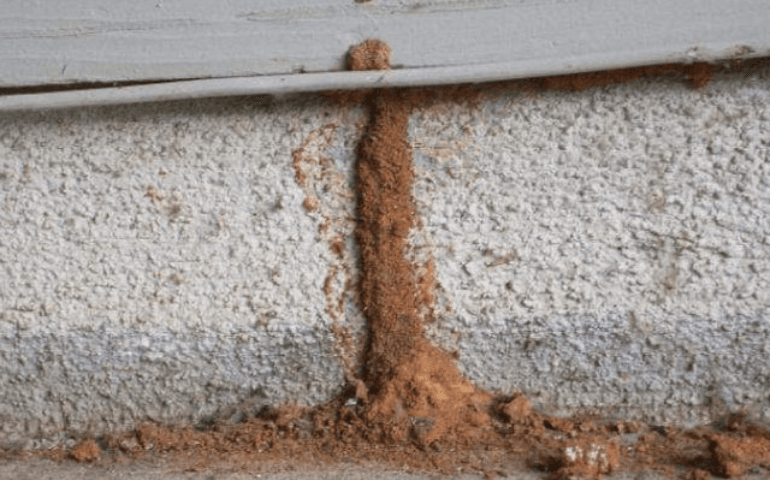
Termite mud tube on a concrete foundation
Shared Risks in Townhouses
In our shared-wall community, termites represent a significant "neighbor-to-neighbor" risk. A single colony can easily forage across multiple units. Because our foundations and wall voids are connected, termites can migrate through shared structural members. If one unit has an infestation, it is highly likely that the neighboring units are also at risk. Regular, professional inspections are a responsibility we share to protect the integrity of the entire building.
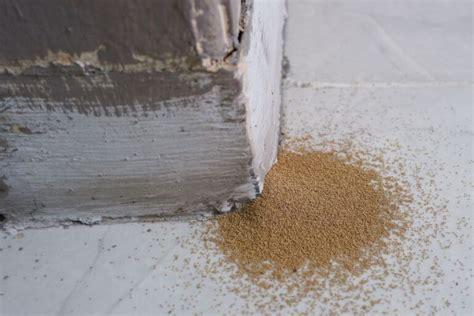
Evidence of termite frass and wood damage
Prevention and Treatment
Preventing termites is far easier than treating an active infestation:
1. Moisture Control: Ensure gutters and downspouts divert water far away from the foundation. Fix any leaks in crawl spaces or under sinks immediately.
2. Wood-to-Ground Contact: Never store firewood, mulch, or wood debris directly against the siding or foundation. Maintain a gap of at least 6 inches between the soil and any wood siding.
3. Professional Treatment: If termites are found, professional intervention is required. This typically involves a liquid soil barrier around the foundation or the installation of bait stations that workers carry back to the colony.
4. Annual Inspections: Because damage is often hidden, an annual professional inspection is the best way to catch an infestation before it becomes a major structural issue.